

Hashimoto’s Leg Swelling and Calf pain
There are many side effects related to hypothyroidism caused by autoimmune thyroid disease. Skin tissues are often affected and one of the most frustrating signs is a condition called myxedema which can happen anywhere on the body, especially on the face and eyelids. It is also troubling when myxedema affects the lower extremities and causes leg swelling. It’s often felt as leg pain along with swelling, itching, and very uncomfortable heaviness in the lower legs.
This happened to me. There was a period of time before I was diagnosed when taking a simple walk resulted in severe pain in my calves – gut-wrenching pain. It would begin after a few short minutes and would disappear as soon as I stopped walking.
Knowing this might be a sign of a heart or vascular issue, I reported symptoms to my doctors and got tested for a condition known as claudication at least 3 times. Fortunately, the tests were negative.
It was odd to me at the time because, in addition to the onset of pain when walking, I also had these “puffy pockets” just below my knees and above my shins. I thought diuretics would help, but typical fluid retention wasn’t the problem.
What is the Cause of Hashimoto’s Leg Swelling?
Although often seen in Graves disease, pretibial myxedema is also a common side effect of hypothyroidism caused by Hashimoto’s.
The cause is triggered by the displacement of hyaluronic acid and the skin of the pretibial area (shin) just below the knee accumulates glycosaminoglycan (a sugar linked with protein that fills the space between collagen and elastin fibers in the dermis) in the deep layers of the skin and infiltrates the area. Appearance wise, it can look a lot like cellulite if the infiltrations are extreme.
The skin can also appear to be “thickened,” and it can be felt as being painful, heavy, and often accompanied by itching – and isn’t relieved much by scratching.
Unfortunately, this type of edema is often misdiagnosed as the type of fluid retention related to kidney dysfunction, and patients are prescribed diuretics or medication for high blood pressure; however, this isn’t the problem!
Pretibial myxedema is directly related to an autoimmune thyroid condition and the displacement of hyaluronic acid in the body – the thyroid in and of itself is not the problem.
What You Can Do About Hashimoto’s Leg Swelling
Although this condition can persist even after balancing thyroid levels, you still must take steps to optimize your levels. You don’t want lab values that are simply “in range,” you want optimal levels for you. Many researchers don’t believe pretibial myxedema related to autoimmune thyroid conditions can be healed. Most studies for treatment options refer to palliative care such as the use of corticosteroids, compression therapy, and comfort measures. However, this study does mention modulation of the immune system.
Applying essential oil of peppermint can definitely help with pain and discomfort. You can apply as often as needed. Frankincense essential oil (Boswellia) has been shown to reduce inflammation and pain. Both are effective for symptom relief.
My issues with pretibial myxedema resolved after I found remission with low-dose naltrexone (LDN). However, my case was “resistant” because it took so long to get a diagnosis (8 years). Had I been diagnosed earlier in my journey, there would have been a greater chance I could have reversed Hashimoto’s with other protocols. I’ve seen it happen in many of my clients. LDN is a life commitment, so it’s worth the effort to try to get into remission with other modalities first.
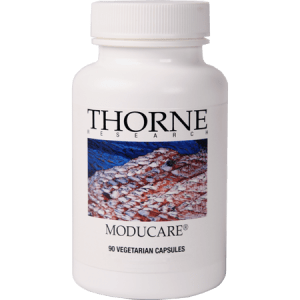 There are other proven, science-based immune system modulators you can try before committing to LDN. Moducare by Thorne Research is available without a prescription and has been shown in research studies to reduce TPO antibodies by balancing T-helper 1 | T-helper 2 white blood cells. It also modulates the stress response by supporting optimal DHEA cortisol ratios and dampens an overactive immune response. Click here to review the science behind its mechanism of action and monograph on plant sterols.
In another study, researchers found Myo-inositol, when combined with selenomethionine, to be an effective treatment in patients with low thyroid function caused by TPO antibodies and Tg antibodies. The study also showed Myo-Inositol treatment reduced TSH to normal levels and improved patients symptoms.
Regarding selenium, please note there are differences:
- Inorganic (selenate and selenite)
- Organic (selenomethionine and selenocysteine)
Selenomethionine is the form of selenium shown in research studies to reduce TPO antibodies when using the correct dose (200 mcg to 400 mcg per day). Selenium also helps with anxiety and oxidative stress.
For getting into remission get into remission the goal should be to modulate and balance the immune system to a healthy state. This will help to derail or significantly reduce an overactive immune system from attacking its host (YOU) and potentially reduce the risks for secondary autoimmune conditions and overall inflammation.
If you’re interested in trying Moducare by Thorne Research, use our Patient Express Code: HCP1070153
*Please note that Thorne has provided a statement that they do not have a business relationship with Amazon. Any Thorne Research products seen on Amazon may be by unauthorized individuals or potentially counterfeit and unsafe.
Recommended for You:
Hashimoto’s & Shoulder Pain


Thank you for this post. You have no idea just how timely this was for me. I have Hashimotos’ and have been experiencing ankle swelling/pain in one leg for the past month or two. This happened out of the blue and I was perplexed. (The last time I had swollen legs was over 44 years ago when i was pregnant with my oldest son and had a estrogen fed tumor/growth.) I began to think this swelling was due to the recent doubling of my thyroid medication, Nature-Thyroid from 1/4 gram in the a.m. to adding 1/4 gram in the p.m OR an injury. But as active as I am, I could not figure out how I injured my leg without knowing it. These was the only two things I could think or. (Or, the summer heat and using my legs so much on our homestead.) I am a 65 year old woman who homesteads on 5 rural acres with my husband which of course means being on my feet from 5 a.m. until I run out of energy. I have been trying to rest/raise my swollen ankle using ice more in the afternoons which does take down the swelling and relieves the pain. I am glad to have your tip about the essential oils and will definitely try those this week. I see my functional medicine practitioner in about two weeks and this issue is on my list of doctors questions. I will be researching the Internet between now and then as well. Thank you for all of your posts, but especially this one. I will be sharing this on my AIP (Auto-Immune Protocal) Facebook group today so others may benefit. Questions: 1) Would massage, esp. lymph draining massage help this issue? 2) Is this swelling (one leg only) related to the fact I have a large vericose vein on that same leg? 3) Or my bodies way of telling me not to use this leg quite so much…or 4) Totally unrelated/and a Hashi thing only? Thank you in advance!
Hi Donna, thank you for reading and for posting a comment 🙂
Hi I was scrolling down and I just saw this article. I have had this type of swelling for years and it is causing knee pain as well which keeps me from doing my hiking groups. I am not sure my thyroid medication or protocol is adequate For the Hashimoto’s . I take very little medication now but obviously something is not right. Acupuncture helps but it is expensive. I wish I had a practitioner that could help me. Thanks for the article. Margaret
Hi Shannon, I also am having the leg swelling and it seems to get worse as I get older. I can’t keep my legs still at night (I remember my mother also had this)
Beside the Naltrexone what else do you recommend I send my doctor a message re: putting me on the naltrexone (havent heard back yet) I am very intersted in trying anything at this point.